
A huge thank you to the AAUW for awarding me the American Fellowship for this academic year! I am now writing my new manuscript on the motion of the body as represented in the novel and its consequences for a modern philosophy of violence. The working title is Minor Fiction: Minor Choreographies in the Novel. Check out the AAUW website and the variety of funding they offer to women across disciplines since 1881. They have funded many famous researchers, academics, politicians, scientists, artists, and humanitarians such as Marie Curie, Coretta Scott King, Margaret Mead, Susan Sontag, and Eleanor Roosevelt. A special thanks to my personal sponsors, associated with Dr. Judith Resnik, who was an astronaut in the 1986 Challenger, and Dr. Marian C. Sheridan.
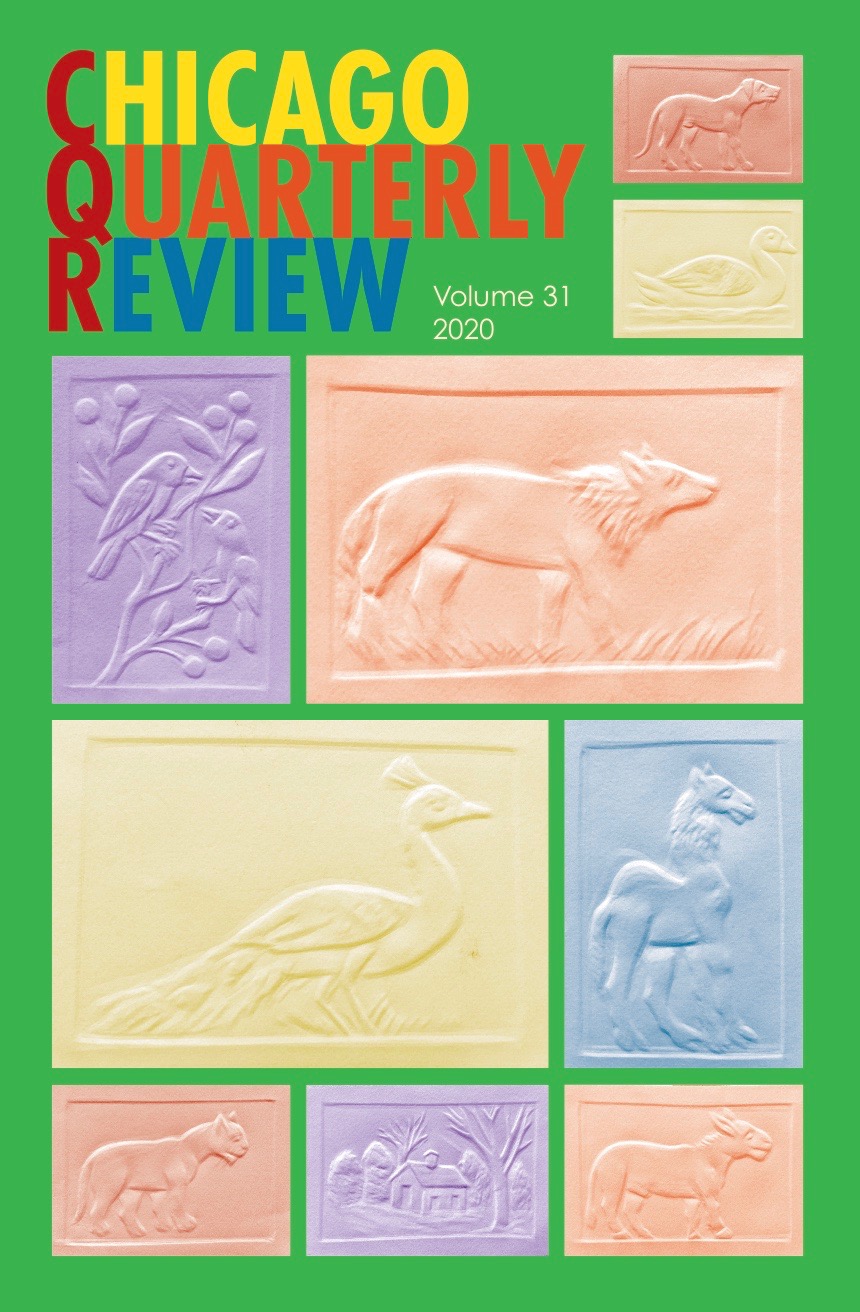
Find my new short story, “The Man Takes His Time,” in the summer 2020 issue of the Chicago Quarterly Review. You can also purchase a copy of volume 31 on Amazon.
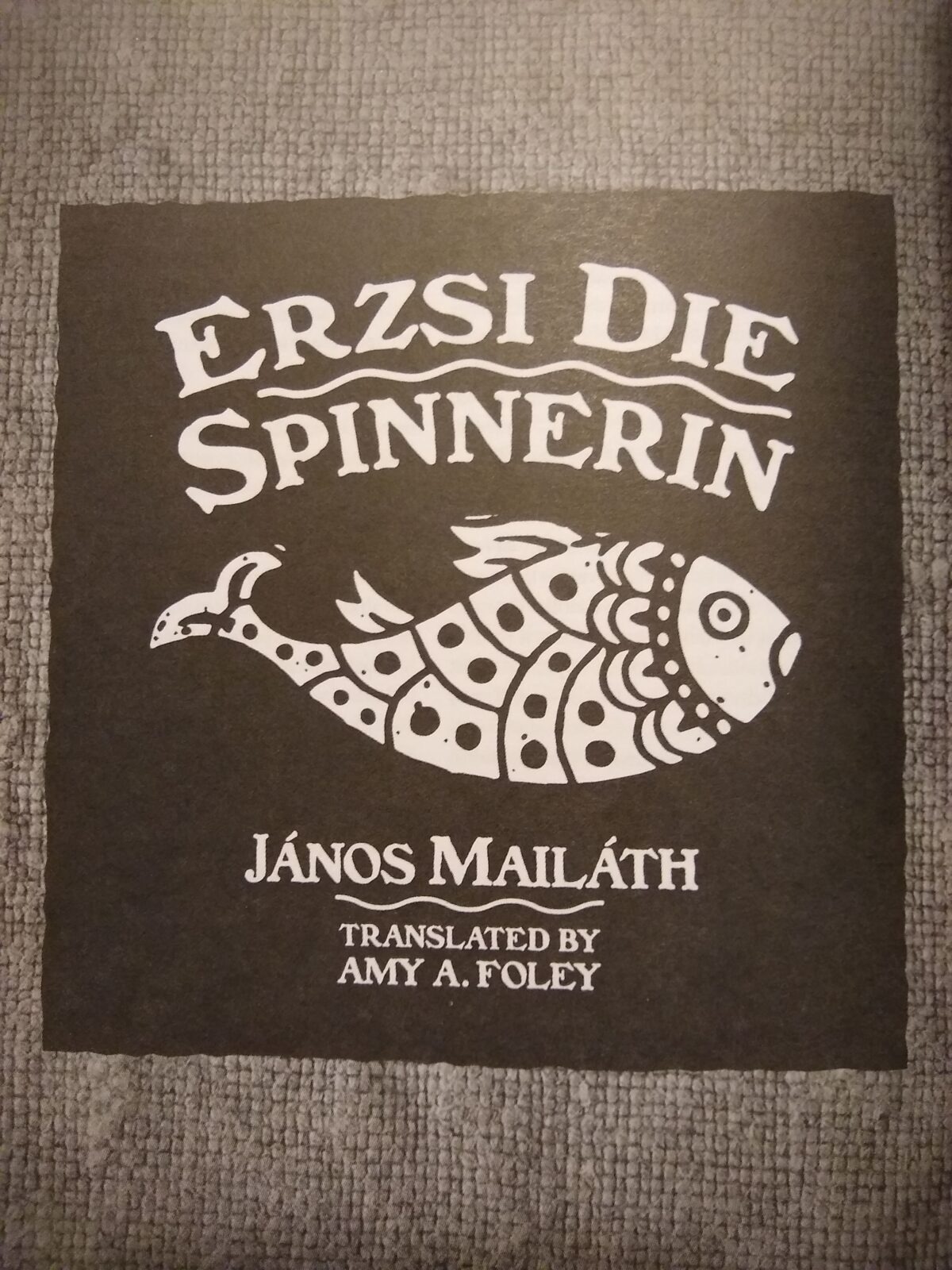
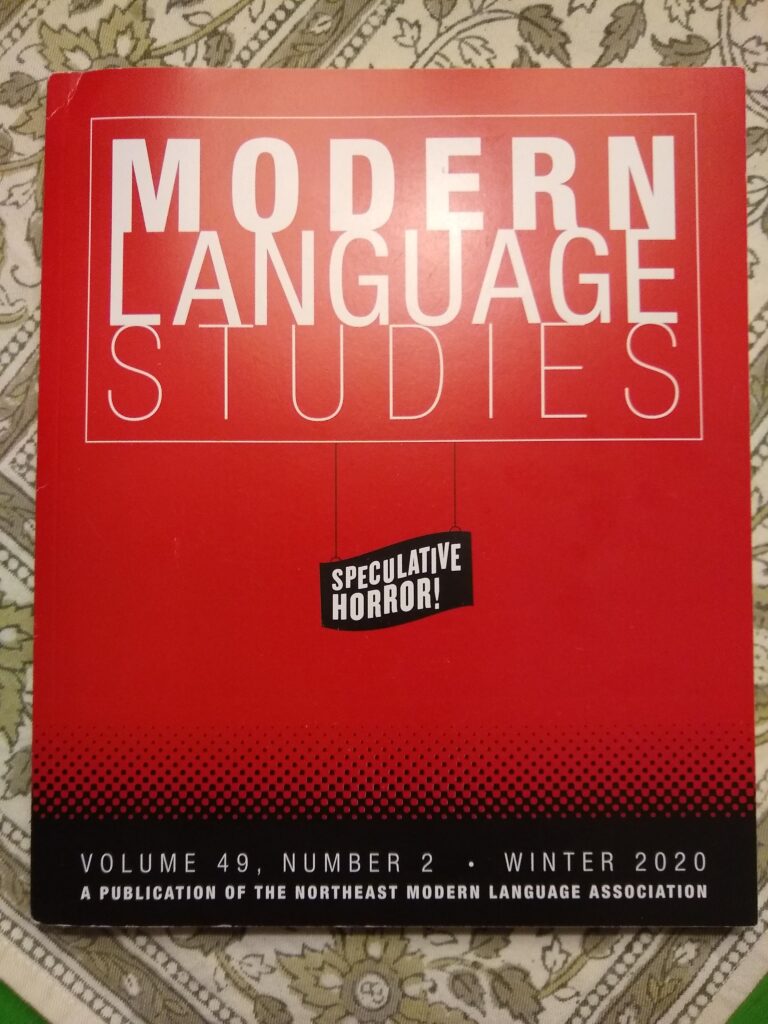
Modern Language Studies, the journal for the Northeast Modern Language Association published my folk tale translation and commentary in their most recent issue (Volume 49, Number 2, Winter 2020.) This issue can now be purchased through the MLS website. “János Mailáth’s ‘Erzsi die Spinnerin’: Introduction and Translation” includes a critical commentary and first English translation of a tale from Hungarian historian and folklorist János Mailáth’s 1825 German language collection, Magyarische Sagen, Marchen und Erzahlungen. In the commentary, I establish the tale’s political and religious context, address its relation to Romantic literary culture and its perceived inauthenticity, contextualize it among fairy tale genres and particularly in relation to other spinner tales, and argue for its vitality to Søren Kierkegaard’s philosophy of infinite resignation given his direct discussion of the tale in Fear and Trembling. I also presented this original work at the 2019 Modern Language Association in Chicago on a panel for Hungarian literature.
“The Philosopher’s Truth in Fiction: An Interview with David Kleinberg-Levin” was also published in issue 21 of Chiasmi International. This interview with David Kleinberg-Levin, Professor Emeritus in the Department of Philosophy at Northwestern University, concerns his recent trilogy on the promise of happiness in literary language. Kleinberg-Levin discusses the relationship between and among philosophy, phenomenology, and literature. Among others, he addresses questions regarding literature’s ability to offer redemption, its response to suffering and justice, literary gesture, the ethics of narrative logic, and the surface of the text.
Find my new article, “The Tension of Intention: Merleau-Ponty Gestures Toward Kafka,” in a special issue (21) of Chiasmi International on Merleau-Ponty’s conception of literature and literary language. This article examines Maurice Merleau-Ponty’s reference to Franz Kafka’s “The Metamorphosis” and “Investigations of a Dog” in his lecture on gesture and reconciliation, “Man See from the Outside.” Given the centrality of gesture in Kafka’s work, this essay considers the connections between the two figures and the likely influence of Kafka on Merleau-Ponty’s concept of gesture and intentionality. It compares their respective philosophies of gesture as they relate to meaning, reliability, silence, music, and intention. Finally, Kafka’s gestural motif of the springing body is suggested as a significant example of Merleau-Ponty’s “escaping intentions,” expressing a powerful will to intend toward others.
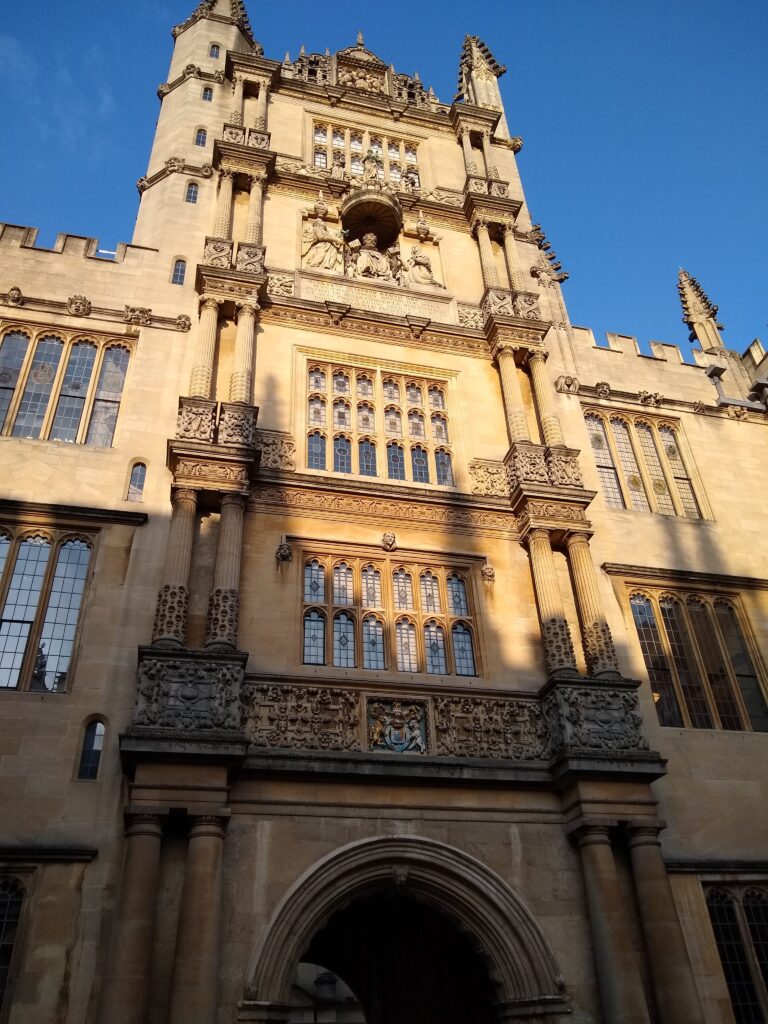
Bodleian Library, Oxford University 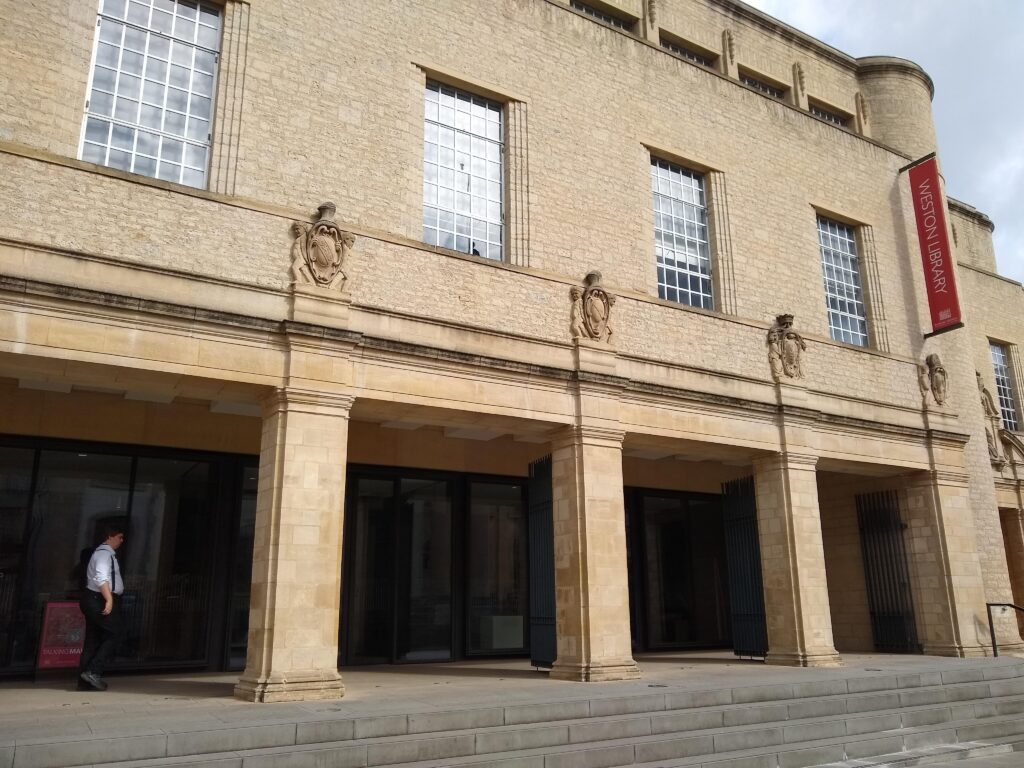
Weston Library, home of the Franz Kafka papers 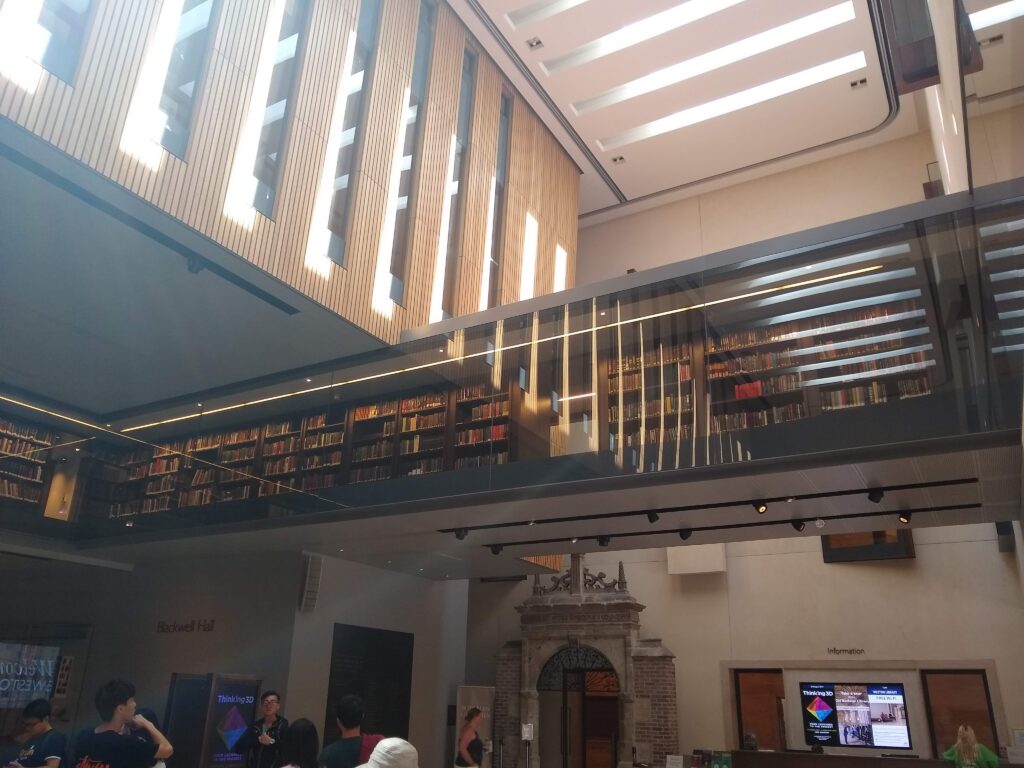
Weston Library
Many thanks to the Northeast Modern Language Association for funding my research in the Franz Kafka papers at the Bodleian Library at Oxford University in August of 2019. My initial findings from Kafka’s sketches and handwriting were presented at a poster session at NeMLA’s annual convention for 2020 in Boston, MA. As a recent recipient of the fellowship , I studied Kafka’s sketches and handwriting in order to continue my research on gesture, modernism, and the modern novel. This work is significant to my future manuscript on bodily motion in the novel and other articles. Stay tuned for more work on Kafka’s sketches!
This study is an extension of my recent publication on Kafka, gesture, and phenomenology. You can find “The Tension of Intention: Merleau-Ponty Gestures Toward Kafka” in issue 21 of Chiasmi International , which is the trilingual language journal concerned with the philosophy of Maurice Merleau-Ponty.


U.S. Studies Online: Forum for New Writing reviews the program for last summer’s annual Faulkner and Yoknapatawpha conference, the theme of which was slavery. My own presentation is mentioned. The corresponding essay, “Ritual Architectures: Doorless and Makeshift Boundaries in Faulkner’s Slave Quarters” is forthcoming in Faulkner and Slavery, published by the University Press of Mississippi. See the article for last year’s highlights:
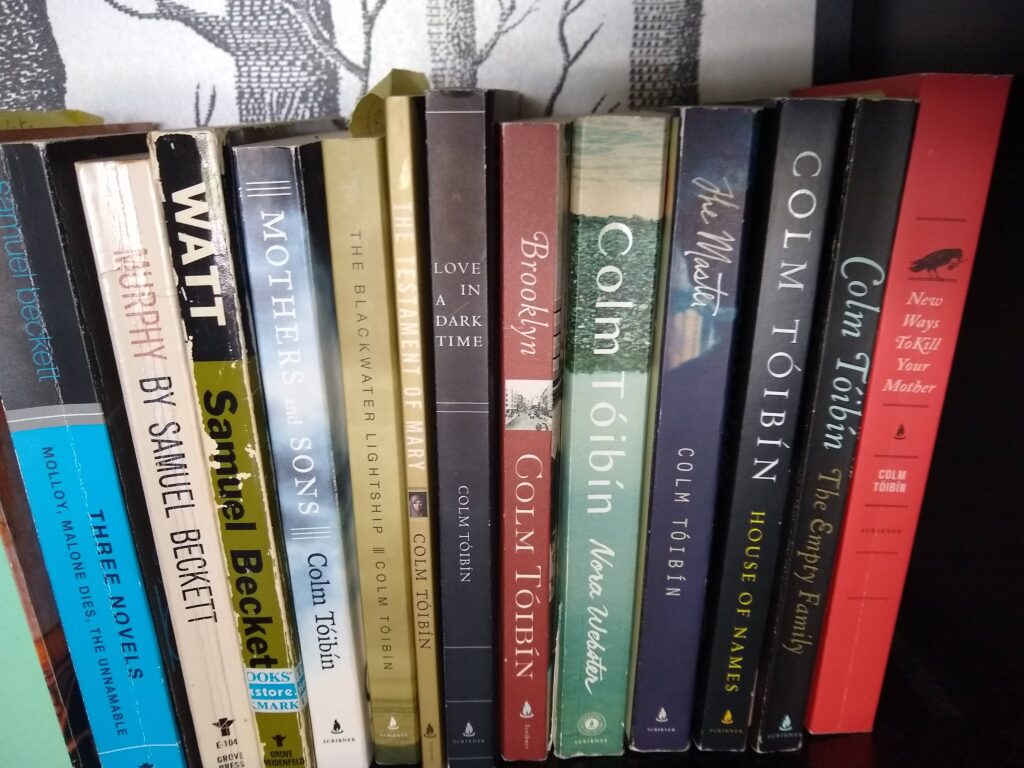
This interview developed after following Tóibín’s work through various stages of my own interest in British and Irish fiction, beginning with my early graduate reading of his short fiction collection Mothers and Sons. This experience was intensified after attending his reading and having dinner with Tóibín at Monroe Community College in 2010. After having written about his novel The Testament of Mary, and having talked with him at AWP in Seattle in 2014, I wrote an article about Tóibín’s spatial configurations and his relationship with postmodernism. This interview is a culmination of my questions pertaining to the distinct political and aesthetic textures of his work.
 On October 10, 2018 Miranda Oakley joined my English Composition class, the theme of which is diversity and power, at Providence College to talk about her experiences as a blind person in relation to ableism, education, and writing. She is a writer, political activist, speaker and contributor to a growing discourse on social justice and disabilities. Her genres of writing include the essay and memoir. Miranda was a student in my World Literature course at a Rhode Island university. She is now continuing to work on her memoir and recently had her chapter entitled “Abilities before Disabilities: My Educational Journey” accepted for publication to an edited collection on social justice. Miranda volunteers for the campaign of Hélène Vincent, who is running for Boston City Council. She maintains an active presence in social media and on MirandaLeeOakley.com where she posts about being a freelance writer, community events, and her projects in progress. She engages with issues related to blindness, ableism, and treating all people with respect. Miranda is a former student and contributor writer for the well-known New England school, Perkins School for the Blind.
Also for Introduction to Literary Studies at Bryant University, this class time was mostly devoted to a “close reading” of Eliot’s modern love epic. I begin by making connections between the text and our first day of class, in which we discussed some essential conventions of literature as described by Jonathon Culler. I point out Culler’s notion of literary self-reflexivity in relation to Eliot’s study of Dante and his beginning “Prufrock” with an epigraph from The Divine Comedy. Together, we apply one method of the interpretation to the first stanza of the poem, for which I write guiding questions on the board. We used this method twice before in class. I ask students to consider key words from the passage and any pattern or relationship that might be established among them; they should think about the tone or mood suggested by these words; they should pick out any significant imagery, etc.; finally, students should determine how they believe the passage fits in with the whole text, how it distinguishes itself and relates to the rest. After we examine the first stanza together, I put the students into groups and assign various stanzas to each. In the following class, each group chooses a partner to write their collective notes on the board while another member explains their process. My goal was for students to critically interpret and vocalize those interpretations several times as a way of trying out their perspectives while having them challenged.